
5 Advanced French Books to Challenge and Sharpen Your Reading Skills:
Looking for a French reading adventure?
Well, let’s pack up and get moving!
Grammar? Check.
Vocabulary? Check.
Basic familiarity with French? You got it!
As your French becomes more advanced, you’ll acquire the tools and provisions necessary to venture further out into the cultural and linguistic Francophone wilds.
You’ll journey through the fictional landscapes of French movies, exposed to new sights and sounds at every turn.
You’ll navigate the difficult seas of French radio, riding out the waves of various accents, intonations and personalities.
Some of your richest and most exciting experiences, however, will come from reading in French.
Still, it’s easy to forget about books when you’re working on polishing your French conversation skills.
You also might need help finding books that really challenge you as an advanced learner. Plus, they’ve got to compete with visual and audio formats as learning resources.
Finding the right books, though, will help you reach new heights in your journey through the French language.
Along the way, you’ll develop greater familiarity with the language and prepare yourself for further adventures filled with still more learning opportunities!
Here are some books specially selected for the advanced French reader.
5 Advanced French Books to Challenge and Sharpen Your Reading Skills
1. “Entre les murs” by François Bégaudeau
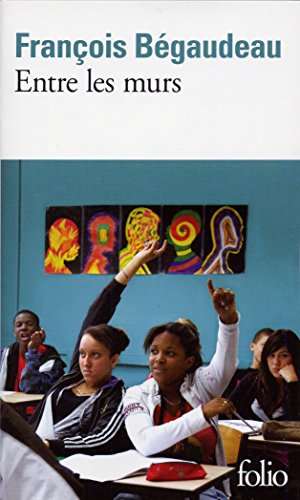 Based on Bégaudeau’s own experience working in an inner-city Parisian school, this novel is full of language you may have never seen before. Dialogue occurs frequently but sometimes with no direct indication of who’s speaking, and is written to convey the way the kids actually talk, both in terms of slang and phonetic modification. You’ll often notice an absence of punctuation or consonants mashed closely together, such as v’nir in place of venir or P’t’êt rather than Peut-être. The narrative style is casual but smart, and Bégaudeau moves quickly between events and characters, never pausing too long for explanation.
2. “Le livre pour enfants” by Christophe Honoré
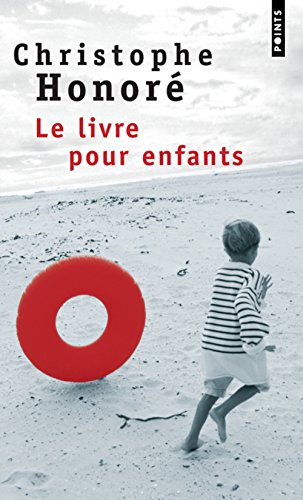 Christophe Honoré is best known for his films, but he’s also written a number of novels and children’s books. “Le livre pour enfants” is, however, deceptively titled. It’s not a book for children but an autobiographical work that touches on certain human and philosophical themes, as well as Honoré’s childhood and life as an author and director. His style is a highly informal, fast-paced stream of consciousness that wavers between humorous, reflective and poetic. “Le livre pour enfants” is a warm and generous book that treats the reader as a co-conspirator and friend, perfect for when you’re in more of a conversational than literary mood, and perfect for an advanced French reader craving a glimpse into hidden facets of French culture.
3. “Dans les bois éternels” by Fred Vargas
 Fred Vargas is a big presence in the world of the French policier, and deservedly so. She writes compelling mysteries and takes full advantage of the French linguistic and cultural palette in the process. Different regions of France as well as social, political and historical issues figure into her books, providing a wealth of knowledge and vocab you can really sink your teeth into. If that weren’t enough, her work is further textured by uniquely crafted characters with quirks that affect the way they behave and talk. Just as an example, “Dans les bois éternels” features a police officer who frequently speaks in verse.
4. “Voyage au bout de la nuit” by Louis-Ferdinand Céline
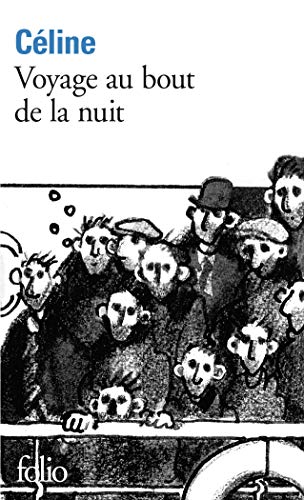 True to its title, “Voyage au bout de la nuit” is a real journey. It’s not the sunniest of books, but it is a literary experience. It’s also the quintessential book for exactly the kind of advanced French reading we’ve been talking about. Céline’s style has been highly influential in literature both in France and all over the world, inspiring authors to play it fast and loose, or just to forego certain literary formalities. “Voyage au bout de la nuit” is based around the thoughts and experiences of Ferdinand Bardamu, a young man who gets involved in WWI almost by accident and goes on to travel through Africa and the United States. You’ll encounter argot and unfamiliar word usage, but this book provides enough context for you to keep up and develop your French comprehension muscles in the process.
5. “Poésies” by Stéphane Mallarmé
 Mallarmé is considered to be one of the most difficult poets to translate, partially because the sound of the language itself was instrumental in the construction of his work. As an advanced French learner, you’ll definitely want to take advantage of being one of the lucky ones who can read his writing in the original! A French Symbolist poet inspired early on by Baudelaire, Mallarmé explored poetry as a form and forced the French language to its limits, sometimes using highly complex sentence structure to stretch a thought out over several lines.
That should keep you busy for at least a while, huh? Just remember, the more you push your own limits, the more experienced of a reader you’ll become and the more accessible French books will be to you. You already have all the resources and equipment you need to start, so pick a direction and get going!