
Animals in French , Cats, cows, chipmunks and crabs.
Sheep, squirrels, snakes and spiders.
As far as we know, there are 8.7 million animal species that live alongside us!
So, whether you’re a pet owner, an omnivore or just someone who lives on the planet, animals are invariably an interconnected part of our human existence.
If you’re learning French, animals have to be part of that process, too.
Luckily, learning the names of some of the world’s creatures is one of the more fun and culturally interesting activities in any language.
And animal names in French are laden with a variety of meanings beyond the simple and literal.
In this post, we’ll learn a whole herd of French animal names and delve into their significance in the French language, as well.
On Solid Ground: Land-dwelling Animals
Land Pets or Farm Animals
un chien — a dog
The first episode of the above Netflix series “Si j’étais un animal…” (If I Were an Animal…) is about being a “Great Pyrenees,” a breed of dog that originated in France and Spain. As you may already know, the Pyrenees mountain range covers the border between these countries.
In French, this dog is known as a Berger des Pyrénées (literally “shepherd of the Pyrenees”), which you can see reflected in the French subtitles. The audio uses the word patou, which comes from an old word for shepherd.
un chat — a cat
The feminine versions of the nouns for dog and cat are chienne and chatte.
However, these both have meanings that are potentially offensive or naughty-sounding depending on context, which you can probably figure out based on similar versions that exist in English.
On a completely different note, if you’re a cat lover who’s learning French, you should know about the Parole de chat (literally “word of cat”) YouTube channel, which is a one-stop shop for funny French-language cat videos.
This video introduces you to the concept of les chats ninjas (Ninjacats!).
This video is also available on FluentU with interactive captions.
un cochon — a pig
A pig can also be called un porc, and a sow is une truie.
un cochon d’Inde — a guinea pig
Literally, “a pig of India.” Guinea pigs actually originated in the Andes Mountains of South America. So why do French speakers call them pigs of India? Well, why do we call them guinea pigs?
un hamster — a hamster
un lapin — a rabbit
un furet — a ferret
un cheval — a horse
un étalon — a stallion
une jument — a mare
Be careful not to mix up the plural for cheval, chevaux, with the word for hair, or cheveux.
une vache — a cow
Vache and variations on it practically make up their own subcategory of French slang and colloquialisms. La vache! is an expression used to express surprise. It’s sort of equivalent to “wow” or “damn” in English.
Vachement is a casual way of saying “really” (or “bloody” in UK English).
un taureau — a bull
un poulet — a chicken
une poule — a hen
un coq — rooster, as in the famous French dish coq au vin.
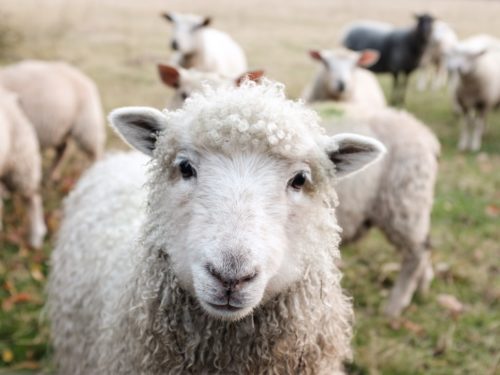
un mouton — a sheep
The concept of compter les moutons (counting sheep) exists in French just as it does in English.
Un mouton, deux moutons, trois moutons… (One sheep, two sheep, three sheep…)
un agneau — a lamb
une chèvre — a goat
Chèvre can also refer to goat’s cheese, but when this happens, it takes on the properties of a masculine noun.
un âne — a donkey
une mule — a mule
Land Wildlife
un écureuil — a squirrel
un blaireau — a badger
un tamia — a chipmunk
Chipmunks aren’t found in France or Europe in general, but it’s interesting to note that French Canadians have their own special word for them, un suisse, which literally means “a Swiss” and may have to do with how chipmunks’ stripes resemble the uniforms of the Vatican Swiss Guard.
une souris — a mouse
As in English, this word can also refer to a computer mouse.
un rat — a rat
Just remember that the only reason the whole concept behind the movie “Ratatouille” even works is because these words are spelled the same in English and French.
un hérisson — a hedgehog
un renard — a fox
Foxes are often portrayed as tricksters. A fox in one of La Fontaine’s fables fools a raven into dropping a piece of cheese and then has the nerve to act like it’s a moral lesson.
But this isn’t always the case. In Antoine de Saint-Exupéry’s “Le Petit Prince” (“The Little Prince”)—that extremely popular piece of literature among French learners—the renard is a friend of the little prince.
un cerf — a stag
une biche — a doe (deer)
un ours — a bear
un loup — a wolf
une girafe — a giraffe
un éléphant — an elephant
un lion — a lion
un tigre — a tiger
un guépard — a cheetah
un babouin — a baboon
un gorille — a gorilla
un singe — a monkey
un chimpanzé — a chimpanzee
un zèbre — a zebra
un serpent — a snake
un gecko — a gecko
une fourmi — an ant
une araignée — a spider
un scarabée — a beetle
un cafard — a cockroach
The French expression avoir le cafard (literally “to have the cockroach”) means to feel down or depressed, or to have the blues, as we might say in English.
If you’re interested in learning more avoir expressions, there’s a great video on the FluentU French YouTube channel that shows you how to use them naturally.
une cigale — a cicada
One of La Fontaine’s fables includes a story about a cicada and an ant (“La Cigale et la Fourmi“). In it, the cicada spends all summer singing while the industrious ant works to store up food for the winter. Later, when the cicada begs for food, the ant is a complete jerk about it. But of course this doesn’t mean that we should judge all ants accordingly.
une sauterelle — a grasshopper
un lézard — a lizard
Under the Surface: Water-based Critters
First, some general terminology.
un poisson — a fish
des fruits de mer — shellfish (as food)
Literally, “fruits of [the] sea.”
un mollusque — a mollusk
Water Pets
un poisson rouge — a goldfish
Yes, a goldfish is a “red fish” in French.
un poisson tropical — a tropical fish
un triton — a newt
une tortue — a turtle
As you may have already guessed, La Fontaine also penned a version of the famous tale of le lièvre (the hare) et la tortue (the tortoise).
Water Wildlife
une moule — a mussel
Moules-frites or moules et frites is a dish consisting of, well, mussels and fries, that likely has Belgian origins, and can be found today throughout Belgium, France and other countries.
The Belgian artist Stromae uses this famous food metaphorically in the song “Moules Frites,” which is actually about something more R-rated that I’m sure you can work out if you want to:
Paulo aime les moules frites, sans frites et sans mayo. (Paulo likes moules frites, without fries and without mayo.)
une huître — an oyster
The music video for the song “Les Huîtres” by Mai Lan comes with a pretty strong visual reminder of what une huître is.
une palourde — a clam
un homard — a lobster
un escargot — a snail
un crabe — a crab
une coquille Saint-Jacques — a scallop
Une coquille by itself is just a shell. In English-language contexts, the phrase coquilles Saint-Jacques, sometimes translated as Saint James’ scallops, suggests a particular preparation of scallops involving a wine sauce and breadcrumbs. But in French, coquilles Saint-Jacques refers to the scallops themselves.
The name comes from Saint James the Greater, or Saint Jacques le Majeur, whose emblem was a scallop shell.
une crevette — a shrimp
une carpe — a carp
un anchois — an anchovy
un thon — a tuna
un saumon — a salmon
un bar — a bass
un doré jaune — a walleye
This fish is literally “golden-yellow,” which I honestly think is a lot name than “walleye.”
un brochet — a pike
une truite — a trout
un maquereau — a mackerel
Be careful, because maquereau can also mean “pimp.”
Also, groseille à maquereau is “gooseberry.” Une groseille by itself is a redcurrant. This seems to make about as much sense as “guinea pig.”
une grenouille — a frog
un crapaud — a toad
un phoque — a seal
une loutre — an otter
une baleine — a whale
un requin — a shark
un calamar — a squid
une pieuvre / un poulpe — an octopus
un morse — a walrus
une anguille — an eel
un manchot — a penguin
Some French speakers use the masculine word pingouin to mean penguin, which is arguably incorrect as this word was originally meant to refer to a great auk, a bird resembling a penguin that’s now extinct.
un alligator — an alligator
un crocodile — a crocodile
The book “Les Yeux jaunes des crocodiles“ (“The Yellow Eyes of Crocodiles”) by Katherine Pancol is a great one to read when you’re at about an intermediate level. But just be warned that if you don’t already have a healthy fear of crocodiles, you will after reading Pancol’s novel.
Airborne Animals: Flying Fauna
un oiseau — a bird
Flying Pets
un perroquet — a parrot
une perruche — a parakeet
un cacatoès — a cockatoo
une colombe — a dove
un canari — a canary
Flying Wildlife
un rouge-gorge — a robin
This is literally “red throat.”
un moineau — a sparrow
une hirondelle — a swallow
un pic — a woodpecker
un étourneau — a starling
un merle — a blackbird
une corneille — a crow
un corbeau — a raven
Okay, so here’s a confession. I’ve never been exactly clear on what the difference between a raven and a crow is in English, or if there even is a difference, let alone in French. I know that I was taught in French class that crow translates to corbeau.
Apparently, though, even if it’s not always noted or people get it wrong, there’s a difference, and in French, the equivalent of “crow” is technically corneille, and the equivalent of “raven” is corbeau.
If it helps, you can always just remember that French poet Stéphane Mallarmé translated the Edgar Allen Poe’s poem “The Raven” into French as “Le Corbeau.“
un aigle — an eagle
un faucon — a hawk
un faucon — a falcon
un canard — a duck
une cigogne — a stork
une oie — a goose
un cygne — a swan
une abeille — a bee
une guêpe — a wasp
un moustique — a mosquito
une mouche — a fly
une puce — a flea
une libellule — a dragonfly
Well, that’s a lot, huh? The truth is, while animals are one of the first basic categories you often tackle while learning a language, the subject of animals is incredibly complex in any language.
So give it some time. Just learn some common animal names if that’s the stage you’re at.
But no matter what your level is, you can probably afford to expand your knowledge of the animals kingdom in French.
And hey, it’s an excuse to watch cute animals videos!