

5 Exciting Comics for Livening Up Your Beginner French Studies:
French beginners, you deserve a break.
Learning French is hard work, and some days you’re probably just desperate to escape your textbook.
Fortunately, with French comics, doing so has never been easier.
While studying on a regular basis is important if you want to master a language, studying doesn’t have to be boring, and it doesn’t take a rocket scientist to figure out that comics can make for some truly awesome alternative reading.
So if you’re sick of grammar books and pronunciation exercises, give comics a try.
They can get you over your studying woes and up to a more advanced level of French before you know it!
You might not necessarily equate reading comics with improving your language skills, but believe it or not, there’s a gigantic pile of them out there that are perfect for learning beginning French.
Besides, using comics to learn French comes with its own set of benefits, particularly for beginners.
5 Exciting Comics for Livening Up Your Beginner French Studies
1. Astérix
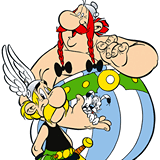 When you think of French comics, it’s more than likely that the figures of Astérix and his friend Obélix spring to mind. Since their creation in the late ‘50s, the Astérix comic books have come a long way from their Franco-Belgian origins and they’re now hugely recognizable on an international level. Even if you’ve never been to France, it’s likely that you know who these guys are. As well as being popular, they can teach you more than a thing or two about the French language.
Following a village of Gauls who resist Roman occupation, this comic series features magic, adventures, humor and a touch of history within its pages, and it’s a brilliant read for beginners of French. Due to their popularity, the comics have been translated into many different languages.
As a result, they’re great for reading and translation exercises.
One option is to get ahold of the same issue in French and your native language and try your hand at reading the French. When words or phrases become difficult, you can refer back to the original in order to gain more understanding. As you become more comfortable with the translation, you can compare the two versions and take note of the different idioms and phrases used.
“Asterix and the Black Gold,” “Asterix and Cleopatra” and “Asterix and the Goths” all make great starting points.
2. Tintin
 Battling for its place at the top of the French language comic book chain is another hugely popular read, Tintin. You probably came across The Adventures of Tintin at one point or another in your childhood (and it was recently turned into a popular film), but you might not have read any issues in the original French.
Following a young reporter and his dog, Snowy, the Tintin series presents its characters with weekly mysteries, clues and all. If you’ve never read it before, it’s a brilliant way to get into comics as it’s so readily available. Created by Belgian artist Georges Remi, it’s worth picking up a copy for the pictures alone.
Often, starting with something familiar is a good idea when getting to grips with new learning material. If there are specific issues of the Tintin comic book range with which you’re already familiar, it might be a good idea to go there first. The comics are particularly useful for spanning a number of different themes. In one episode, you can expect to find comedy, politics, cultural issues and personal conflict. If you’re looking for a source from which you can learn many things at once, Tintin is for you.
3. Lucky Luke
 Lucky Luke is another great comic series straight from Belgium—there must be something in the water over there! Set in the American Old West, this series follows the life of Lucky Luke, a cowboy known for his ability to shoot faster than the wind. It sits somewhere between affectionate parody and a tribute to the Old West, focusing on the theme of right vs. wrong and inevitably culminating in some sort of rescue mission.
As with Astérix, the series contains a number of loose historical representations, incorporating real figures within fictional characters. The history, however, is a little murky, so don’t expect to use the comic books as a lesson in what really happened in the Old West!
The comics themselves are fairly simplistic and repetitive, so they’re perfect for beginners to brush up on vocabulary, understand basic sentence structures and learn about easy grammar points. The comics have also been turned into a number of live action films, so if you want to extend your learning beyond reading, this is a great avenue to take. Understanding the characters and scenario before watching a film will give you a good foundation and make comprehension much easier.
4. Spirou et Fantasio
 Another creation from the Franco-Belgian alliances, Spirou et Fantasio is a hugely popular comic publication, readily available to read or buy. The series follows the two eponymous friends as they get involved in a number of adventures. Over the years, it has been likened to both Tintin and Astérix. Aided by their pet squirrel and inventor friend the Count of Champignac, the two main characters get involved in their fair share of trouble and intrigue. If you like adventure, this is the series for you.
It’s also another great source for comedic writing. Throughout the various gags and disasters which occur at the Spirou offices, there’s a lot of unusual and idiomatic vocabulary to be learned.
The short length of the comics make them perfect to dip in and out of during a day or week and will enable you to pick up many language points in a short space of time. Due to the nature of the content, many dialogue points are repeated. So even if you’re a beginner, it’s simple to get your head around what’s going on.
5. L’Immanquable
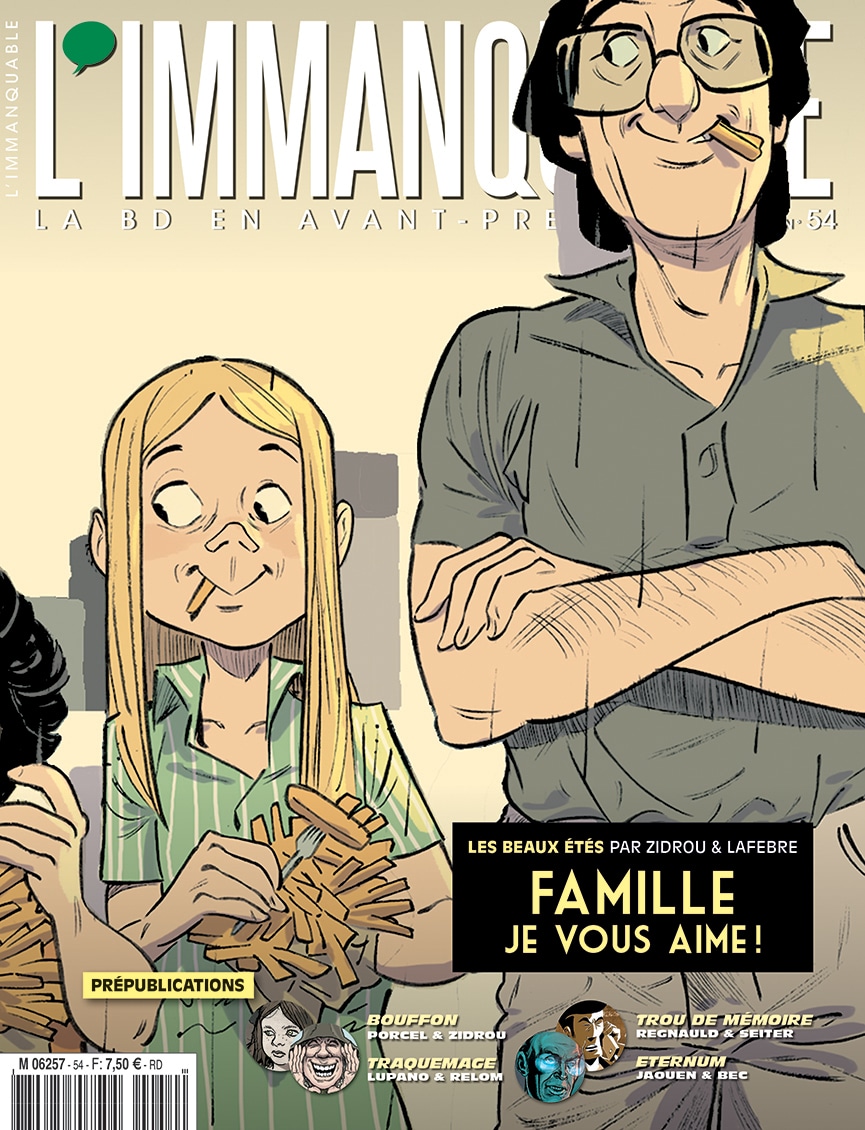 If you can’t choose between the comics above and would rather go for more of a general approach, L’Immanquable might be for you. It’s not exactly a comic book, but more of an anthology overview that offers a collection of many stories. It contains previews of dozens of different comic strips in the making and a number of in-depth features that look at specific publications in more detail. If you’re not sure whether comic books are for you, or if you want to peruse a number of different genres before committing to any one publication, L’Immanquable is a great option.
The book can be used particularly well if you want to learn in quick-fire sessions or on the go. Simply pick an entry and begin reading, making notes of any words you don’t understand. While it might seem hard at first, reading through a comic strip in its entirety is a good way to get to grips with the overall themes and plot. In second or third readings, you can go back in more detail and focus on individual language points.
When it comes to learning French, comic books are nothing to laugh at.
We may think of them as publications for kids, but there’s a load of content out there that not only makes learning easy and accessible but also a lot of fun.
So if you’re hitting a wall with your French learning, why not try putting down that textbook and picking up a comic book instead?