

10 Young Adult Book Series for Intermediate French Bookworms:
Once you graduate from elementary French reading, what’s next?
Same thing as when you moved beyond the ABCs and storytime in English.
That’s right, it’s time to explore French young adult fiction!
As a beginner, you probably found level-appropriate material in comics and children’s books.
Since then, you may have made the mistake of picking up an advanced novel that was too big for your britches.
There are lots of reading options available for intermediate learners, but few offer as comforting, relaxed and stable a transition as your YA staples.
Nothing too high-brow here, and you can even find translations of your teenage favorites.
If anyone gives you a funny look for re-reading teen romance novels in French, you can huffily declare, “I’m learning!”
Furthermore, many YA novels are written in a series format, which is highly advantageous for learners.
Series appealing to adolescents are simple, entertaining and addictive.
If you want to achieve fluency, kicking up your feet and digging your nose into a book is one of the best ways to get there. Reading is part of immersion, one of the best ways to learn vocabulary and get a command of the language.
In short, the more material the better! And if you can get hooked on a really long series, you’ll have your intermediate French reading totally locked down.
So let’s get you set up with a series and mastering French like les ados français (French teenagers)!
But first, a quick primer to get you ready for breaking out those full-length texts.
How to Unlock the Power of French Novels as an Intermediate Learner
1. Re-read Favorites
You’ve just had the revelation that children’s books are too easy for you, and you’re ready for a challenge! To move onwards and upwards, pick up a translated copy of one of your favorite books from when you were young.
This way, you already know the characters, the general plot and that you’ll like the book. This leaves you more brain power to concentrate on getting a handle on unfamiliar tenses and vocabulary.
2. Use E-books
If you have an e-reader, not only is it easier to get your hands on titles in French, but you can also use devices like the Kindle to look up words you’re unfamiliar with right on the device. This way, you don’t have to lug around a dictionary AND a French edition of the fifth Harry Potter book at the same time.
In addition to being able to look up words, you can highlight and make notes. While you can do this in a regular old book, e-readers make it easy to look up your notes later on. So if you come across a tense you’re unfamiliar with or a whole phrase that baffles you, you can mark it with a big old “Quoi !?!?” (What?) and return to it later.
3. Learn the Literary Tenses
French has certain tenses that are only used in literature. But before you start groaning and giving up, remember that in order to read, you only need to know how to recognize the conjugations. You don’t need to conjugate them yourself.
The past simple is the most common of the literary tenses and is used the same as the perfect tense in spoken French. Here are two additional literary tenses that may baffle you upon first glance.
Past Anterior
This is a compound tense and is the literary equivalent of the past perfect.
Both the past perfect and the past anterior translate into English as “I had been,” “I had seen,” “I had sneezed,” etc. Both express things that have happened in the past before something else happened. The past past!
To form the past anterior (or to recognize it), you use the past simple of the helping verb avoir (to have) or être (to be):
Avoir
J’eus
Tu eus
Il/Elle eut
Nous eûmes
Vous eûtes
Ils/Elles eurent
Être
Je fus
Tu fus
Il/Elle fut
Nous fûmes
Vous fûtes
Ils/Elles furent
Then you add the past participle and voilà! You’ve got a weird-looking compound tense:
J’eus mangé (I had eaten)
Tu eus vu (You had seen)
Il fut allé (He had gone)
Elle fut descendue (She had descended)
Nous eûmes nagé (We had swam)
Vous fûtes venu(e)(s) (You had come)
Ils eurent mis (They had put)
Elles furent sorties (They had gone out)
Note: Gender and quantity agreements still apply here since the past anterior is a compound tense.
The Imperfect Subjunctive
Don’t you dare roll your eyes! If you’re venturing into intermediate French literature, then you should already know of (or be in the process of mastering) the subjunctive.
The imperfect subjunctive, like the past anterior and the past simple, is just a literary version of a good old favorite.
The imperfect subjunctive is used when the main clause is in the past. So if someone writes a book in the past with literary tenses and the subjunctive is needed, the imperfect subjunctive is the tense they’ll use.
Once again, you don’t have to know how to form this, just how to recognize it.
But if you plan on writing French literature one day, then by all means, conjugate away!
For -er verbs, use the conjugation of the past simple for “Il.”
Example:
Il alla (He went)
And that’s your stem!
For -ir and -re verbs, use the conjugation of the past simple for “Il.”
Example:
Il finit (He finished)
Then drop the -t for the stem!
Then add the ending:
je -sse
tu -sses
il/elle -^t
nous -ssions
vous -ssiez
ils -ssent
And there she is:
…que j’allasse (I went)
…que tu finisses (you finished)
…qu’il eût (he had)
…que nous mangeassions (we ate)
…que vous vinssiez (you came)
…qu’elles montassent (they ascended)
Note: The same usage rules that apply to the regular subjunctive also apply to the imperfect subjunctive.
Makes you feel smarter when you learn new fancy tenses, huh? Relish it!
Now you’re ready.
10 Young Adult Book Series for Intermediate French Bookworms
You can easily get your hands on French translations of popular books and series such as “Harry Potter,” “The Hunger Games,” “Divergent” or John Green novels. Translations of English-language novels into French are very popular, especially amongst teens. Here are some suggestions to broaden those horizons. Most of these were written specifically for a YA audience. Others just tend to appeal to that group. But they’re all for theoretical ages 10-18.
We’ll start off with some translations, and move on to some original French book series.
1. “Les Désastreuses aventures des Orphelins Baudelaire” (“A Series of Unfortunate Events”) by Lemony Snicket
 Everything about this series is equal parts grim and hilarious. A 13-book series (that unlucky number is no mistake), it follows the Baudelaire orphans as they are pursued and constantly put in peril by the notorious Count Olaf. If you haven’t read the series in English, you’ll still find the storylines easy to follow. Larger vocabulary words are woven in seamlessly. It’s written in the second person in many parts, addressing the reader, and explains backstory as you go along. The jokes, puns, word puzzles and mini-vocab lessons translate well into French.
For old fans, re-reading these books in French is a good primer for Netflix‘s TV series adaptation.
2. “Uglies” by Scott Westerfeld
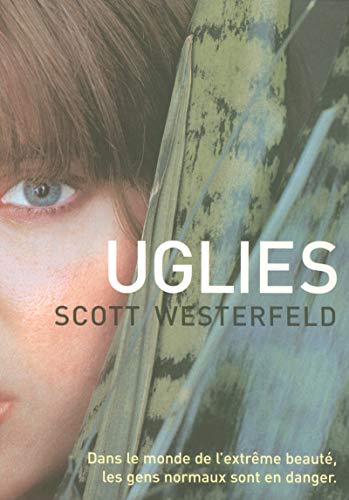 Dystopias and unlikely heroes are common tropes in young adult fiction, largely because they’re fun to read about. This series (originally written as a trilogy, then expanded) is about a futuristic society where everyone gets plastic surgery at age 16 to become pretty. When the main character meets a fellow “ugly” (pre-operation normal-looking person) who doesn’t want the operation, her dystopian adventure begins.
If you’re a fan of books like “The Hunger Games” or “Divergent,” in which an unlikely female hero goes against the grain of her oppressive futuristic world, this is another series for you. All 4 books are available in French. In addition to being addictive enough to hold your attention, the language level is perfect for intermediate learners who have already gotten their feet a little wet.
3. “Wizards” by Diane Duane
 Cue the epic alternative to Harry Potter! Known as the “Young Wizards” series in the English-speaking world, this series has 10 books. The first one was originally written in the ’80s and the tenth book is planned for release in 2016. What sets this apart from Harry Potter is its alternating urban and fantastical settings.
This is recommended for anyone who likes urban fantasy or magic. Though the books can be lengthy, they prove to be a quick read, even in French. If you make it through all 9 (then 10), you’re sure to “magically” develop the reading skills to move on to more difficult prose.
4. “À la croisée des mondes” (“His Dark Materials”) by Philip Pullman
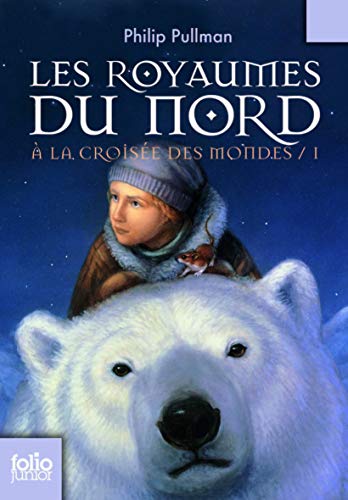 The “À la croisée des mondes” series is great for intermediate readers who want to dive into something with complex themes and classical allusions. This trilogy takes place in parallel worlds, jumping into and out of different universes. It alludes to Milton’s “Paradise Lost” and has thematic tie-ins to Christianity. Written with ages 9-18 in mind (but fun for all ages!), it’s great to read in French because of its easy-to-follow prose and deeper ideas (we can handle those in French, right?). Oh, and there’s a movie as well, but watch it dubbed!
5. “La Stratégie Ender” (“Ender’s Game”) by Orson Scott Card
 So maybe you aren’t quite ready to tackle a long-winded series—you just want to get your feet wet. In the tradition of adapting science fiction and dystopian novels from English into French, “La Stratégie Ender” is a classic no matter what language you’re reading it in.
In preparation for a wartime invasion, children are trained by being put through increasingly difficult games. Our main character, Ender, ends up being a pro at this (why do YA main characters get all the luck?). And although “La Stratégie Ender” is the most popular title, there are 3 sequels to it, just in case you get hooked.
6. “Voyages Extraordinaires” by Jules Verne
 A purist, are we? A lot of French novelists may come to mind: Voltaire, Camus, Proust. But you’re not quite there. You need a step ladder, something less literary.
Here’s a whopper for you to start. Jules Verne’s series of so-called extraordinary adventures is a collection of 54 novels. You can handle that, right? It was essentially Verne’s attempt to chronicle the history of the universe. Luckily, you do not have to read all 54, but maybe just pick and choose the ones that interest you.
Some of the more popular titles are:
“Voyage au centre de la terre” (“Journey to the Center of the Earth”)
“Vingt mille lieues sous les mers” (“20,000 Leagues Under the Sea”)
“Le Tour du monde en quatre-vingt jours” (“Around the World in 80 Days”)
By all means, challenge yourself to read all of them in their original French format. Apparently, you’ll learn all the secrets of the universe…and French.
7. “Kamo” by Daniel Pennac
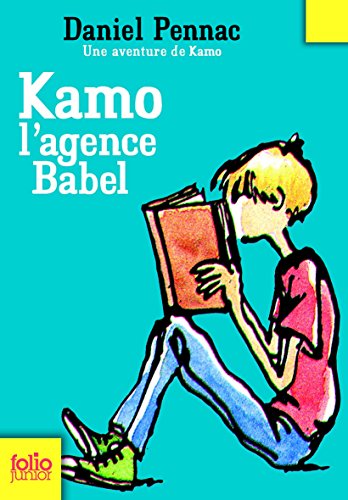 Kamo is a boy in the fifth grade, and though the books are targeted for that age, this French series serves as a perfect introduction to Daniel Pennac. Follow Kamo’s adventures in school with Pennac’s funny and engaging writing.
Finish these 4 books and you may be on your way to some of Pennac’s more advanced work like “Le Dictateur et le Hamac” or “Au bonheur des ogres.”
8 and 9. “Les Chevaliers d’Émeraude” and “Les Héritiers d’Enkidiev” by Anne Robillard
 We’ve touched on quite a bit of science fiction and fantasy, but for those of you looking for a completely fantastical world to immerse yourself in, these books from Quebec will keep you busy. The first series, “Les Chevaliers d’Émeraude,” is 12 books, followed by “Les Héritiers d’Enkidiev,” which currently stands at 11 installments. These books are full of fairies, elves, wars amongst men and gods, knights, wizards and magic. Essentially, everything a French fantasy lover needs.
It’s a long haul, but the nice thing about a series is that by the time you get into the second or third book, you’re in the rhythm of the story, the characters and the jargon. All that’s left is increasing comprehension and learning the vocabulary you don’t know.
10. “La Légende de Quisqueya” by Margaret Papillon
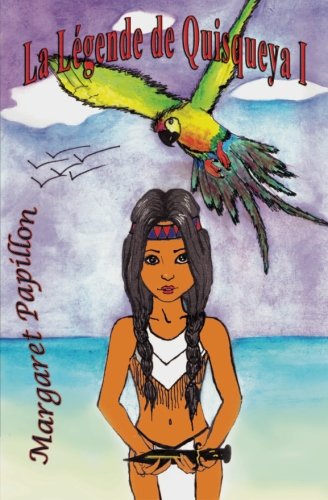 Out on a bet, four teenagers climb the difficult peak of Macaya. On their way up, someone tells them they will meet a horrible fate if they try to conquer the peak. Guess what? They don’t listen. And guess what else? They meet a terrible fate, but start a fantastic adventure to the center of the Earth. Adventure and strange magic galore! The reading level in this double set is perfect for intermediate learners and will serve as a gateway to some of Margaret Papillon’s other fine novels.
Reader Tip: You may have noticed that many of these books are listed as Tome I, Tome II, etc. Saying “Tome I” in French is like saying “Book One” in English.
Bonus Book: “Et si c’était vrai…” by Marc Levy
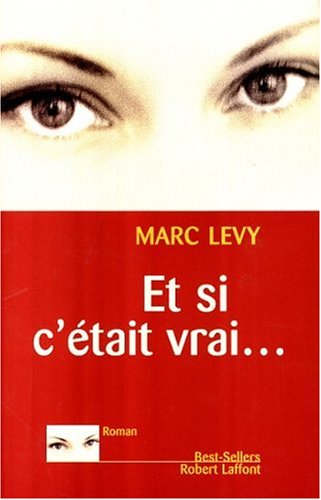 You romance lovers were probably wondering where I was going to sneak one in. Maybe you’ve already exhausted those French translations of John Green’s tales of young love.
Trivia time! You may be familiar with the 2005 film, “Just Like Heaven” starring Reese Witherspoon. It was originally based off this French novel. It’s about a man who rents the apartment of a woman in a coma. When her ghost comes to the apartment, they begin a…well, unconventional relationship.
A little on the cheesy side, this novel will tide over romance readers as they build their French up to tackle the likes of “Madame Bovary.” It isn’t part of a series, but has YA fiction appeal and might lead you on to read more of Marc Levy’s books.
So, you’ve got quite a reading list ahead of you!
Combine a couple of these books with some speaking and listening practice, and you’ll be on your own fantastic adventure to fluency.